Palmistry Guide
Hand shapes, palm lines and the traditions behind them
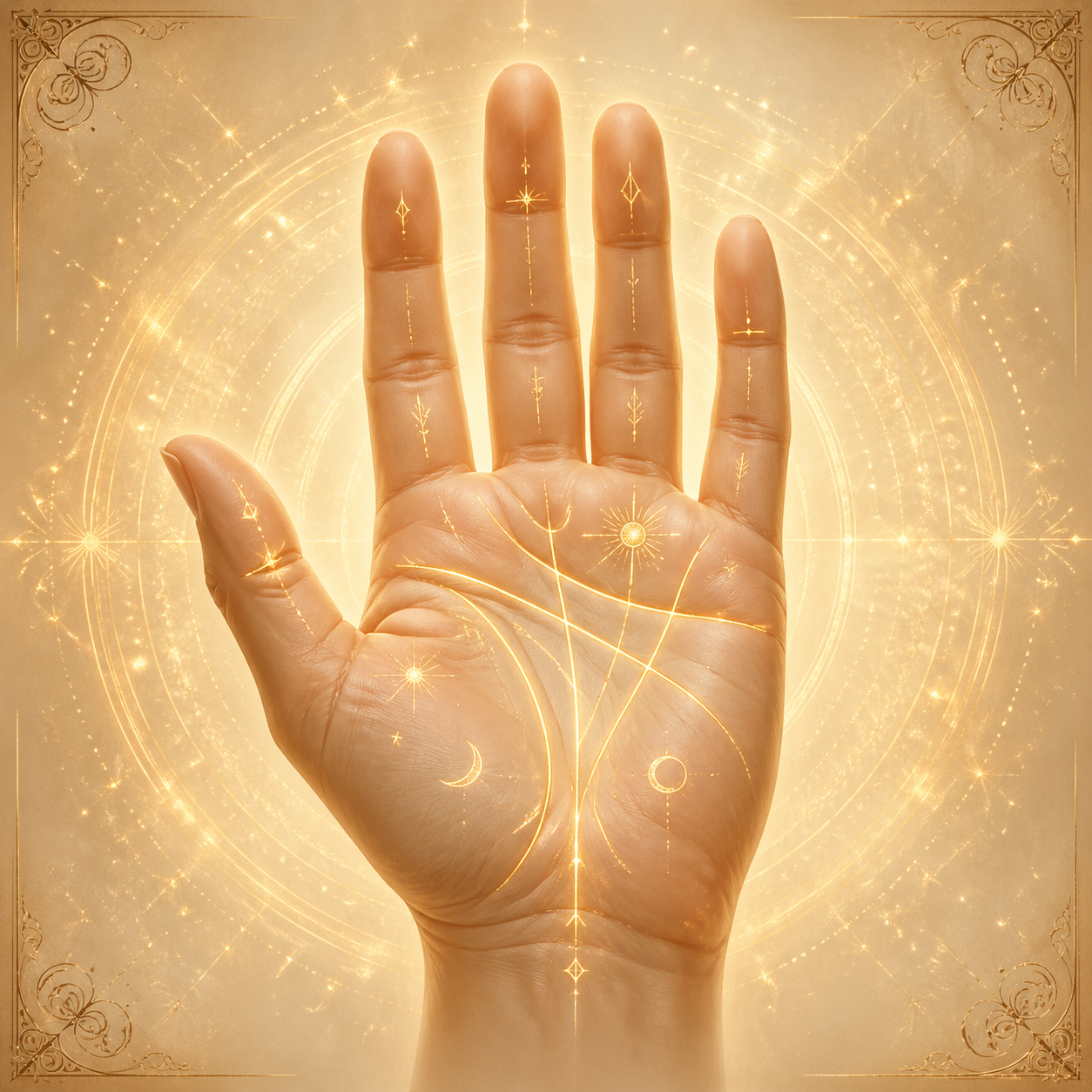
Palmistry is the traditional practice of interpreting hand shapes, palm lines and raised areas called mounts as symbols of character and experience. Western, Chinese and Indian traditions offer different ways to tell those stories. This guide introduces what readers look at, which hand they choose and how AI applies the same symbolism to a photo. Use it for reflection and entertainment, not predictions about health, lifespan or relationship outcomes.
Upload your palm photoWhat is palmistry?
Palmistry, also called chiromancy, combines observations of the hand with traditional symbolic interpretations. A reader may consider the palm's shape, finger proportions, creases, raised mounts and smaller marks together. The meaning depends on the tradition and the reader, rather than a single universal code.
Treat a reading as a prompt to think about your habits and experiences. Palmistry is not a scientifically validated method of measuring personality or predicting events. A line or mark cannot diagnose illness, measure lifespan or determine the outcome of a relationship.
Western, Chinese and Indian palmistry
These traditions share an interest in the hand but differ in their symbols and hand-selection customs. Practices also vary within each tradition.
Western palmistry
Western accounts often trace palmistry to ancient Greek sources and later European writings. Many modern readers compare the dominant and non-dominant hands and use the four elemental hand shapes. Their interpretations are symbolic, not evidence of a fixed future.
Chinese palmistry
Chinese palmistry belongs to the broader tradition of reading physical appearance, known as xiangshu. The familiar 'men left, women right' custom influences hand selection, though practitioners may compare both palms. These customs do not establish facts about health or relationships.
Indian Hasta Samudrika
Hasta Samudrika Shastra is the study of the hand within the broader Samudrika Shastra tradition of interpreting bodily features. Readers consider lines, mounts and marks, with methods that differ across schools. The symbolism is not a verified forecast of life events.
What do palm readers look at?
Start by describing what is visible, then consider the traditional story attached to it. The following parts form a general overview; the linked guides cover individual lines in more detail.
Hand shapes
The Western four-element framework describes earth hands as square palms with shorter fingers, water hands as long palms with long fingers, fire hands as long palms with shorter fingers, and air hands as square palms with long fingers. These are symbolic groupings, not biological categories or a ranking of people.
Major lines
The life, head, heart and fate lines are the four main landmarks used for symbolic reflection, not predictions of health, lifespan, intelligence, relationships or careers.
Minor lines
Readers also discuss smaller creases such as marriage and sun lines, but their presence or absence cannot promise marriage, success or a particular relationship outcome.
Mounts
Mounts are the raised areas traditionally named Venus, Jupiter, Saturn, Apollo, Mercury, Moon and Mars, used as symbolic themes rather than measurements of personality or health.
Special marks
Stars, crosses, islands, triangles and squares are names readers give to small line patterns. They are symbolic marks, not omens or warnings that an event will occur.
Try the symbols on your own palm
Start with a clear photo and explore the traditional themes. For entertainment and reflection only, not predictions about your future.
Try a palm photo readingWhich hand do you read in palmistry?
Many Western readers compare the dominant hand, associated with current habits and choices, with the non-dominant hand, associated with starting tendencies or potential. For a left-handed person, those roles usually place the left palm first. The comparison is symbolic, not a test of which hand tells the truth.
The Chinese 'men left, women right' custom selects hands differently. Some Indian schools begin with the right hand for men and the left for women; others compare both or consider hand use. Ask which convention is being followed instead of assuming one rule applies everywhere. None can establish future health or relationship outcomes.
How AI relates to traditional palmistry
AI palm reading identifies visible lines and shapes in a photo, then applies traditional symbolic interpretations to them. Lighting, focus and framing affect what is visible. Automating that process does not make palmistry a more accurate prediction or turn it into a health assessment. Use the interpretation as a reflection prompt and set aside anything that does not fit your experience.
Explore your palm with a question in mind
Use the reading to consider your habits and possibilities. For entertainment and reflection only, not predictions of health, lifespan or relationship outcomes.
Explore your palm reading