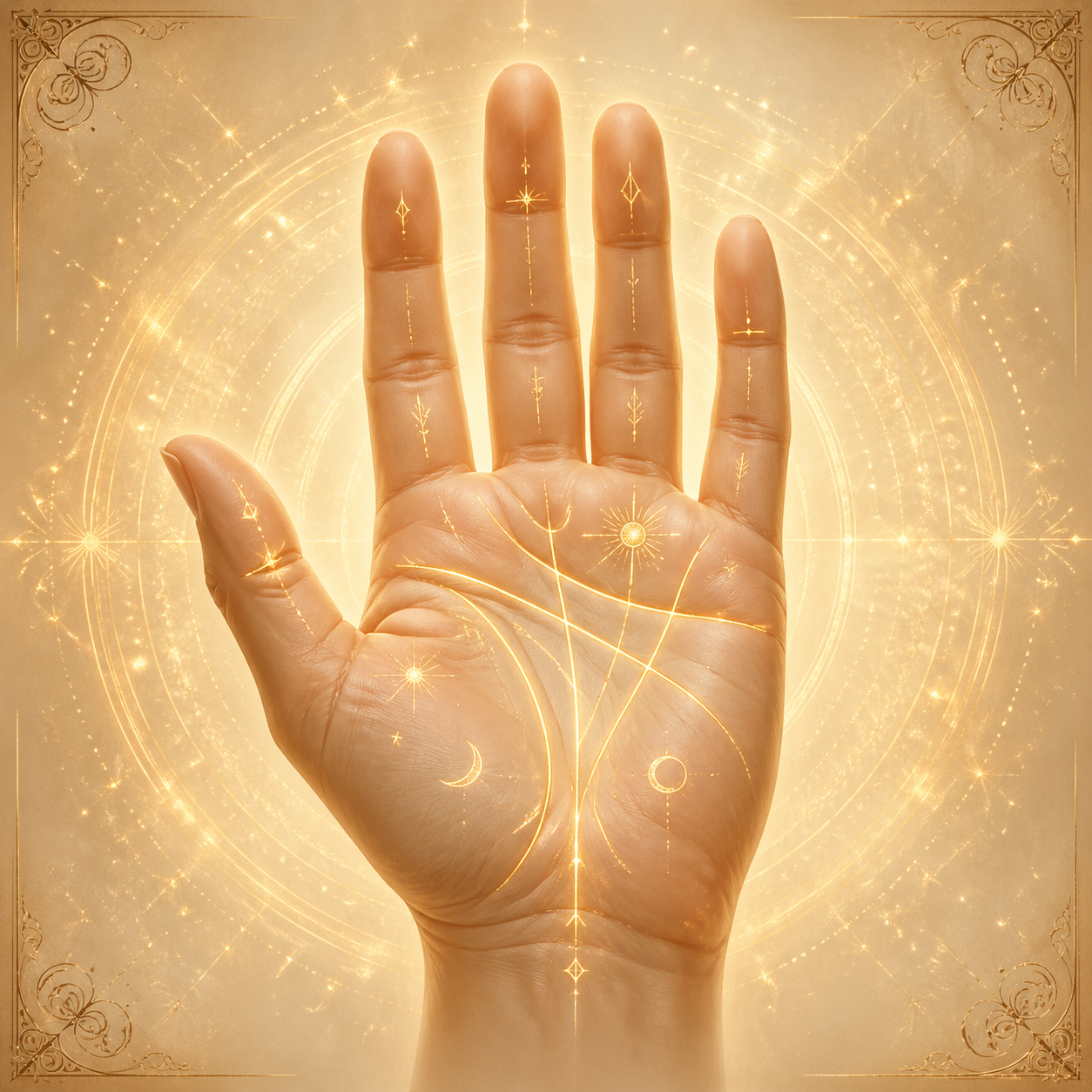
Left Hand Palm Reading
What your left palm means depends on the tradition
Left hand palm reading often treats the left palm as a symbol of inborn tendencies and potential when it is your non-dominant hand. In Western practice, the dominant hand represents current habits and choices, so a left-handed person's left palm takes that role instead. Chinese 'men left, women right' and some Indian conventions select hands differently. There is no universal left-hand rule. Read these traditions as prompts for reflection and entertainment, not evidence about health, lifespan or relationship outcomes.
Upload your palm photoWhat does the left hand represent?
Before assigning meaning to a crease, decide which convention you are using. The same left palm can be read as potential, present-day choices or a traditional starting hand. Those interpretations are symbolic frameworks, not measurements that prove who you are.
Western practice: potential on the non-dominant hand
Many Western readers associate the non-dominant palm with inherited tendencies, starting traits or unrealized potential. For a right-handed person this is usually the left hand. They compare it with the dominant palm to discuss how habits and choices develop. Neither palm establishes a fixed destiny, and line differences are not evidence that you have changed in a particular way.
Chinese tradition: men left, women right
The familiar Chinese convention of 'men left, women right' starts with a man's left palm and a woman's right palm. Some practitioners also compare both hands or use other approaches. This custom concerns hand selection; it does not mean the left hand is always the inborn hand or that gender determines a person's character.
Indian traditions: the school matters
Some Indian Hasta Samudrika schools traditionally begin with the right hand for men and the left for women. Other readers consider both palms or place more weight on hand use. Customs differ across schools and practitioners. Ask which method is being followed rather than treating a left-hand interpretation as a single rule shared throughout India.
Left hand and right hand: a practical comparison
These two examples use the Western dominant-hand approach for someone who is right-handed. Keep the roles separate from the physical sides of the body. A traditional gender-based approach may choose a different starting palm.
Left palm — usually non-dominant for a right-handed person
Readers may use this palm to explore starting tendencies or potential. Notice a line's location and direction before discussing its symbolism. A lighter or shorter line is not a missing talent, and a mark on this palm does not prove an inherited trait.
Right palm — usually dominant for a right-handed person
Readers may use this palm to discuss current habits, choices and expression. Compare the same crease rather than unrelated marks on opposite hands. A difference can invite reflection, but it cannot confirm a future event or show that one hand is more truthful.
If you are left-handed, the roles change
For a left-handed person, the left palm is the dominant hand in this approach and represents current choices; the right becomes the non-dominant comparison for potential. Do not mechanically apply 'left equals inborn.' If you use different hands for different tasks, note that context rather than forcing a rigid category.
Try comparing one visible feature at a time: where the head line starts, how the heart line curves or whether a fate line is visible. Describe what you see first. Use the story as a question about your experience, not a verdict about your future.
Four major lines on the left palm
The landmarks do not change because you are looking at the left hand. Find each crease before interpreting it, then keep your chosen hand convention in mind. The linked guides show the same lines in more detail.
Life line: the curve around the thumb
Locate the arc around the fleshy base of the thumb. Symbolic readings connect it with energy and daily rhythm; on a non-dominant left palm, readers may frame those themes as starting tendencies. Its length does not measure lifespan, and a break does not diagnose illness.
Head line: the crease across the middle
Look for the line crossing the middle of the palm from near the thumb and index finger. Readers associate its course with ways of thinking or focusing. On the left hand, the potential-versus-current emphasis depends on dominance. The line cannot measure intelligence or decide what you should study.
Heart line: the upper horizontal crease
The heart line sits below the finger bases and is used in stories about feelings and connection. A left-palm reading may invite questions about familiar emotional patterns. It cannot reveal someone else's feelings, promise a partner or determine whether a relationship will succeed.
Fate line: a vertical line toward the middle finger
A fate line may rise through the center of the palm, but it can be faint or absent. Readers use it to discuss direction and responsibility. On either hand, it is not a career forecast. An unclear line does not mean you lack purpose or have less potential.
Look at your left palm with fresh questions
Bring a clear photo to the existing reading experience. For entertainment and reflection only; a reading is not a health assessment or a promise about the future.
Try a palm photo readingHow to photograph your left hand
The homepage recommends your dominant hand. If you are exploring your left palm using this guide, use the same photo technique and the existing upload control; this page does not introduce a separate upload flow.
Use even light so the palm creases are visible without glare or deep shadows.
Choose a simple background that keeps attention on the palm.
Hold your left palm open toward the camera with relaxed fingers; do not force a wide stretch.
Keep the full hand sharp and unobstructed, from fingertips to wrist. Check the focus before uploading.
Return to the homepage to choose your photo in the existing uploader. A clearer image makes the visible features easier to discuss, not the interpretation more predictive. Do not use a reading to make medical or relationship decisions.
Let the reading start a conversation with yourself
Use the interpretation to explore your own habits and possibilities, and leave aside anything that does not fit. For entertainment and reflection only, not predictions of health, lifespan or relationship outcomes.
Explore your palm reading